THANK YOU FOR SUBSCRIBING

Network Infrastructure Mag Weekly Brief
Be first to read the latest tech news, Industry Leader's Insights, and CIO interviews of medium and large infrastructures exclusively from Network Infrastructure Mag

End 2 End (E2E) Technologies’ website draws a visitor’s attention toward two sections—the Industrial Automation Solution and ‘Employee of the Year.’ This reveals one of E2E’s intrinsic principles: valuing its trained employees, experienced engineers and field technicians, and top-level software developers equally with the cutting-edge solutions that have cemented its position as a leading, end-to-end industrial automation and connectivity solution provider. “The technological value proposition of our solutions defines us, but the strength of our team has been the real guide to our success,” says Tom Grove, Senior VP of Development and Support at E2E. The team and E2E’s solutions were not built in a day; it was the gradual materialization of Gregory Crow’s vision. Crow, the CEO, co-founded E2E with Thomas Peterson with the goal of creating an innovative, end-to-end management solution for industrial communications. After futile attempts with off-the-shelf solutions, E2E embarked on designing and manufacturing its own collector device that can listen to hundreds of sensors and other end devices using standard and proprietary protocols. Due to the out-of-box commissioning, the company simplified the setup for the field installation, while assembling data through its E2E cloud-based software in real time. The next few years witnessed E2E developing easy-to-implement products for industrial customers. Today, the company’s focus is on designing robust software and hardware solutions for operational asset management to ensure clients are up and running in minutes. Delivering Value to Industrial Customers Many companies, with their budget constraints, lack the ability to efficiently monitor their critical operational assets and industrial network activity.
The remote working trend that the pandemic has triggered is not going to change soon. Undoubtedly, this increased workforce mobility has offered several benefits pertaining to cost savings and flexibility. But it has also invited connectivity and networking challenges for businesses. While larger enterprises can easily implement SDWAN solutions to dynamically mix and match connectivity options to optimize traffic and improve performance, small businesses are the hardest hit. They lack the budget and, often, expertise to deploy and maintain such enterprise-grade tools. Enter RabbitRun Technologies. Founded in 2017, RabbitRun Technologies is driven by the mission to increase reliability and improve the quality of business communications over the internet, offering best-in-class solutions at an affordable price. “We deliver small businesses SD-WAN solutions with enterprise level performance and features that transform applications and services using the internet,” says Pat Saavedr


In the exciting era of digital transformation, businesses are embracing the opportunity to upgrade their networks from outdated MPLS systems to modern wide-area network solutions that empower their cloud-based initiatives. However, it’s important to acknowledge that the journey towards network transformation may face obstacles due to the lack of expertise in deploying the right technologies. Enter Mosaic NetworX, a leading networking technology solution provider specializing in complex global multi-location networks. Mosaic NetworX bridges the knowledge gap for clients seeking to redefine their communications infrastructure by leveraging multiple SD-WAN technologies and a team of certified engineers. Through partnerships with various technology vendors, the company offers comprehensive solutions incorporating industry-leading WAN technologies and connectivity services to power cloud applications. Mosaic NetworX excels at designing and deploying highly efficient networks tailored to

Steven Selders, VP, Application Delivery & Enterprise Architecture, JEA; Michael Eaton, Director, Enterprise Data and Integration, JEA; Rob Raesemann, Principal, Raesemann Enterprises

Darin McCoy, Analytics Manager, Caterpillar Inc. and Andrei Khurshudov, Director of IoT Analytics, CAT Digital

Joe Zirilli, Vice President, Artificial Intelligence, Parsons

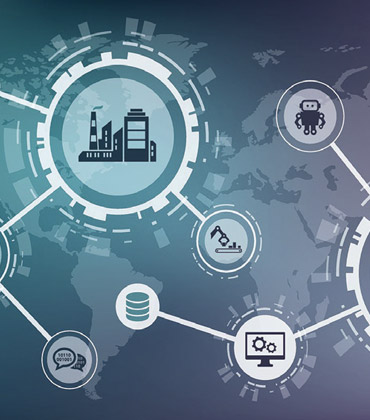
The Industrial Internet of Things (IIoT) is one of the Internet of Things (IoT) subsets that focuses on industrial applications.
Software-defined Wide Area Networks, also called SD-WANs, apply software-defined networking technology to WAN connections used by enterprises, especially to support branches located in different parts of the country.
IIOT: The Game-Changer For Businesses
As we enter the Fourth Industrial Revolution, IIoT is becoming increasingly essential for businesses looking to stay competitive. One of the key benefits of IIoT is the ability to improve operational efficiency.
By connecting devices and sensors across the production process, businesses can gather real-time data and insights that allow them to optimize operations and reduce waste. This results in improved productivity, reduced downtime, and lower operating costs. IIoT also enables predictive maintenance, allowing businesses to identify potential equipment failures before they occur and avoid costly downtime.
However, while IIoT offers many benefits, it also poses significant challenges. One of the key challenges is the need for robust cybersecurity measures. With the increasing connectivity of devices and sensors, the risk of cyberattacks and data breaches is higher than ever. Businesses need to implement strong security measures to protect their data and ensure the safety of their operations.
In conclusion, IIoT is a game-changer for businesses looking to stay competitive in the Fourth Industrial Revolution. With its ability to improve operational efficiency, create agile supply chains, and enable predictive maintenance, IIoT is transforming the way businesses operate. However, to reap the benefits of IIoT, businesses need to address the challenges of cybersecurity and implementation complexity. With the right strategy and partners, businesses can unlock the full potential of IIoT and achieve success in the digital age.