THANK YOU FOR SUBSCRIBING

Network Infrastructure Mag Weekly Brief
Be first to read the latest tech news, Industry Leader's Insights, and CIO interviews of medium and large infrastructures exclusively from Network Infrastructure Mag
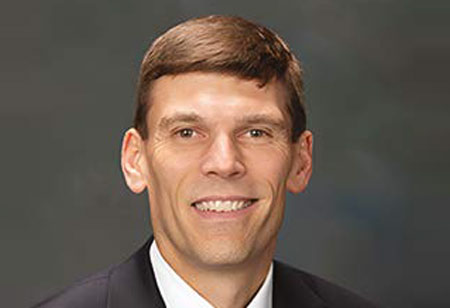
 Brian Sorensen, Vice President USA Sales, Network Solutions, Leviton
Brian Sorensen is Vice President of USA Sales for Leviton Network Solutions. For more than 20 years, he has led business development and strategic relationships with Leviton's global channel partners, helping organizations build the connectivity infrastructure that powers the digital economy.
Building the Last Yard of AI
It's hard to have a business conversation today without AI coming up.
Most discussions focus on things like models, computing power, data centers and the race to build smarter systems. But behind every AI query, training model and generated response is something people rarely talk about: the physical infrastructure that makes it all work.
And that infrastructure doesn't start in a server room. It starts with network designers, contractors and technicians installing the cabling and fiber that connect everything together.
I call this the "last yard" of AI infrastructure. It's where AI's potential is either realized or quietly compromised. In an industry moving as fast as AI, mistakes at this stage can cost millions of dollars and delay projects by months.
The Invisible Foundation of AI
The AI industry has a visibility problem, and it has nothing to do with software.
The headlines celebrate the latest AI models and billion-dollar investments from hyperscale data center operators. What rarely gets mentioned are the skilled professionals responsible for building the networks that make those facilities operational. Today's data center technicians work in some of the most demanding environments ever created, and leverage a skillset founded on years of experience to keep networks running smoothly.
Just a few years ago, a 288-fiber cable was considered impressive. Today, fiber counts can be five to 10 times higher. As AI workloads continue to grow, so does the complexity of the cabling infrastructure that supports them.
"AI isn't just about algorithms, models or massive computing clusters. It's also about the people who make sure every model, query and inference has a reliable physical path to travel."
The density inside a modern data center requires incredible precision. Every fiber connection must be cleaned, tested and verified. Every cable pathway matters. In an environment where space is limited and systems are tightly interconnected, a single misplaced cable can create significant operational challenges.
But these professionals do much more than install infrastructure.
They bring experience, judgment and real-world problem-solving to every project. They know how designs perform outside of a blueprint. They understand the practical realities of deployment, and when customers or contractors ask for recommendations, their recommendations are based on years of hands-on experience that no specification sheet can provide.
As a result, contractors and field technicians are playing a larger role in shaping today's data center projects. They're helping influence specifications, recommending alternatives when supply challenges arise and guiding decisions that will impact a facility's performance for years to come.
Building for Tomorrow, Not Just Today
That expertise isn't just important during installation. It's also critical when planning for the future.
Data center development is moving at an unprecedented pace. Hyperscalers are investing hundreds of billions of dollars into new facilities, often working under highly compressed timelines. In this environment, speed matters—but only if what gets built is ready for what's next.
The challenge is that many of tomorrow's requirements don't exist yet.
Facilities being built today will need to support future workloads, higher rack densities, evolving power demands, and new network architectures that have not yet been fully defined. That means every design decision must balance today's needs with tomorrow's possibilities.
This is especially true when it comes to the three fundamental constraints of every data center: power, cooling and connectivity.
Getting these elements right the first time is more than a technical achievement: it's a business advantage.
Designing with future growth in mind can help avoid costly retrofits later. Anyone who has tried to upgrade a live data center knows how disruptive and expensive those projects can be. Building flexibility in from the start is almost always the better investment.
Why the Last Yard Matters
This brings us back to the last yard.
When a technician installs infrastructure with future expansion in mind—thinking about pathways, accessibility and long-term growth—they're doing more than completing a project. They're helping create a foundation that can support future innovation.
That's the part of the AI story that rarely gets told.
AI isn't just about algorithms, models or massive computing clusters. It's also about the people who make sure every model, query and inference has a reliable physical path to travel.
Network designers who look ahead. Field technicians who get it right the first time. Contractors who bring decades of expertise to some of the most complex projects ever built.
These professionals may not make headlines, but the future of AI depends on them just as much as the technology itself.
Read Also