THANK YOU FOR SUBSCRIBING

Network Infrastructure Mag Weekly Brief
Be first to read the latest tech news, Industry Leader's Insights, and CIO interviews of medium and large infrastructures exclusively from Network Infrastructure Mag
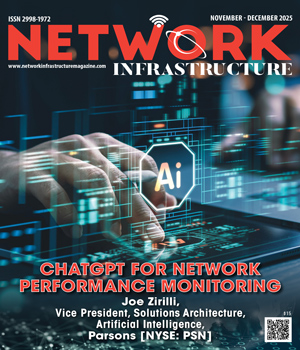
If you’re like me, sometimes you just want to have a conversation with your network. When things go wrong, and you’re searching for a workaround, it would be nice to just ask, “Do you know why my network is so slow?” If you join me in that frustration, there’s good news! And, if you thought the solution would have something to do with AI, well, you’re right! There’s a new AI technology called Generative Artificial Intelligence (GenAI) that uses Large Language Models (LLMs) trained on massive amounts of data. When augmented with information about your network, GenAI chatbots can be used to have a conversation with you about anything contained within the LLM. The most recognized chatbot is ChatGPT, by OpenAI, but there are many others, and more are being developed every day (e.g., (Claude by Anthrophic, Llama 2 by Meta, Bing Chat by Microsoft, and Bard (LaMDA) by Google). Recently, companies that provide Network Performance Monitoring (NPM) tools have started offering tools that use ChatGPT, and the results are going to change the industry. The best part is that anyone can use ChatGPT today and see significant improvements in their NPM. We have only begun to scratch the surface, but ChatGPT can provide many amazing benefits that were previously only available by asking experts, and even then, we may not be able to provide answers as clear and accurate as ChatGPT. For example, here are a few common tasks that ChatGPT can help you with: ● Hardware-related issues – ChatGPT can provide suggestions as to possible causes of the issues and then provide step-by-step instructions on how to fix them. It sometimes provides configuration scripts and other instructions to guide you to a fast solution. ● Network issues – ChatGPT can be your diagnosis assistant. It will offer recommendations, provide alternative approaches, and allow you to ask questions along the way if you don’t know how to carry out its instructions. "Recently, companies who pr
Bringing a new wireless site on air is rarely as simple as it looks on paper. Many companies in the industry focus on just one part of the process. They might specialize in RAN integration, DAS commissioning, or ATP testing. This leaves gaps where problems can go unnoticed. Full Moon Telecom was founded to fill those gaps. Led by CEO Vicky Sansoni, the company distinguishes itself by managing every stage of a project from start to finish. That comprehensive approach allows them to catch issues early, prevent costly mistakes, and ensure systems not only go live but stay live, providing a level of reliability that narrowly focused competitors cannot match. From the beginning, the company’s approach has been rooted in data. Every project leaves behind patterns that reveal what makes deployments succeed, what slows them down, and what can derail them altogether. Over years of projects, Full Moon has built up a library of knowledge that its teams lean on with every new job. By comparing past successes against current work, they can spot inconsistencies that might otherwise slip through unnoticed. Clients see the results in fewer delays and far more predictable outcomes. But the secret is not just in the data. It is also in the decades of experience the team brings to the field. They have seen projects that run flawlessly and projects that go off the rails, and that collective memory is part of what makes them so quick to respond. When a challenge appears that no one has encountered before, the company does not guess. Instead, they work directly with the equipment manufacturers, solve the issue, and then make that solution part of their playbook going forward. The breadth of its work is what sets the company apart. A typical firm might focus on DAS commissioning or integration alone. Full Moon handles continuous wave testing to ensure the antennas and cabling are sound. It takes on the integration itself, connecting systems and making sure every node behaves the way it should. Full Moon moves into DAS commissioning, flagging bad hardware or misconfigurations before they become costly headaches. Then, once the system is live, the company conducts acceptance tests that check whether the signal is performing as designed. Few firms can claim that full spectrum of involvement, and it has become the company’s calling card..


The VoIP industry is at the forefront of global communications, building new connections every day that link people and businesses effortlessly. However, there's a fascinating paradox at play: while this technology fosters connections, client engagement often feels impersonal and detached. GigTel, a leader in the VoIP, unified communications as a service (UCaaS) and call center as a service (CCaaS) space, is committed to redefining the industry's landscape, making those connections not just efficient but genuinely meaningful. The company delivers unmatched personal attention, ensuring a superior engagement experience in a market filled with impersonal robotic voices. Its white-glove service delivery ensures that customers can directly communicate with different facets of team GigTel—from sales and support to engineers and project managers—throughout their engagement lifecycle. The combination of hands-on service delivery and top-tier technology allows the company to act as a one-stop shop for businesses seeking a unified communication platform. Its penchant for delivering seamless integration, reliable service and exceptional customer care at every process stage has made the company a leading player in the market. “We provide a complete solution that simplifies our customers’ operations while maintaining the highest level of service they expect from a seasoned telecommunication provider,” says Brett Gilsinger, president. A key competitive advantage of GigTel is its ability to manage every service aspect from infrastructure to customer support in-house. This capability, derived from the 75-year experience of its parent company, Endeavor Communications, enables GigTel to be nimble and responsive to distinct client needs while delivering top-tier solutions. In a recent real-world display of its flexibility, the company helped a tax services provider that operated seasonally and needed a flexible communication solution to cope with the surging call volumes during tax season. GigTel devised a custom pricing plan for the company that aligned with the ebbs and flows of the client's call volumes, resulting in a successful implementation and a satisfied client. Today, Gigtel’s relationship with this client has expanded from managing just a handful of their franchises to over 20. The company has scripted many similar success stories, resulting in GigTel’s impressive net promoter score (NPS) of 71 for the year 2024. An exceptional client satisfaction score of 99.4 percent further underlines the quality of user experience and its level of support.

David Ahn, Director, Commercial Engineering, Vyve Broadband
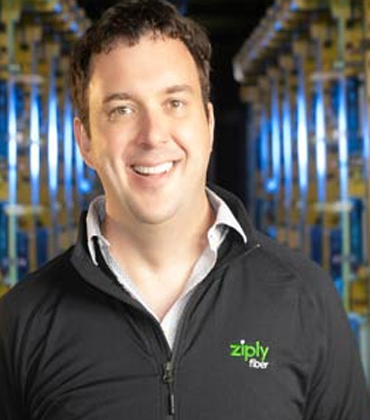
John van Oppen, Vice President, Network, Ziply Fiber

Ismael Hernandez, VP, Information Technology, the Larson Group (TLG Peterbilt)

Rebecca Cowen-Hirsch, Senior Vice President, Government Policy & Strategy, Inmarsat

Pascal Menezes, CTO, MEF

Scott Demming, Vice President - Strategy & Business Intelligence, Mountain Ltd

David Woodham, Director of Engineering, Southern Linc
DAS commissioning and RAN integration services enable reliable connectivity, faster deployment, and future-ready networks through automated support for global digital transformation and communication efficiency.
DAS commissioning and integration require careful planning, installation, testing, and ongoing maintenance to ensure optimal system performance and reliability.
Advancing Connectivity Through Smarter Network Solutions
The growing reliance has turned infrastructure from a behind-the-scenes function into a core element of performance. When networks are designed well, they allow teams to work without barriers, share information instantly and deliver services faster. Reliable connectivity has become as essential to an organization’s success as its people or its products.
To keep pace with this evolution, many enterprises are investing in projects that extend both coverage and capacity. Among the most critical are distributed antenna system (DAS) commissioning and radio access network (RAN) integration; two services that strengthen connectivity in environments where communication must never falter.
Facilities, including airports, hospitals and commercial complexes, often face signal limitations that standard systems cannot overcome. Through commissioning and integration, engineers fine-tune every element, from antenna placement to signal alignment, ensuring the network operates as one cohesive system. The result is consistent, high-quality coverage that supports everyday communication and data-intensive operations.
Integrating DAS with RAN infrastructure also prepares organizations for next-generation connectivity. As 5G adoption expands, these systems ensure networks can scale and adapt without major redesigns. More than a technical upgrade, this approach creates a foundation that evolves with emerging digital demands, providing reliable performance and long-term resilience.
In this edition of the Network Infrastructure, we explore the recent developments in DAS commissioning and RAN integration services that are driving innovation and reshaping communication across industries.
We hope this edition of the Network Infrastructure helps you find the right partner for your business requirements.